A crisis that travels far beyond the battlefield
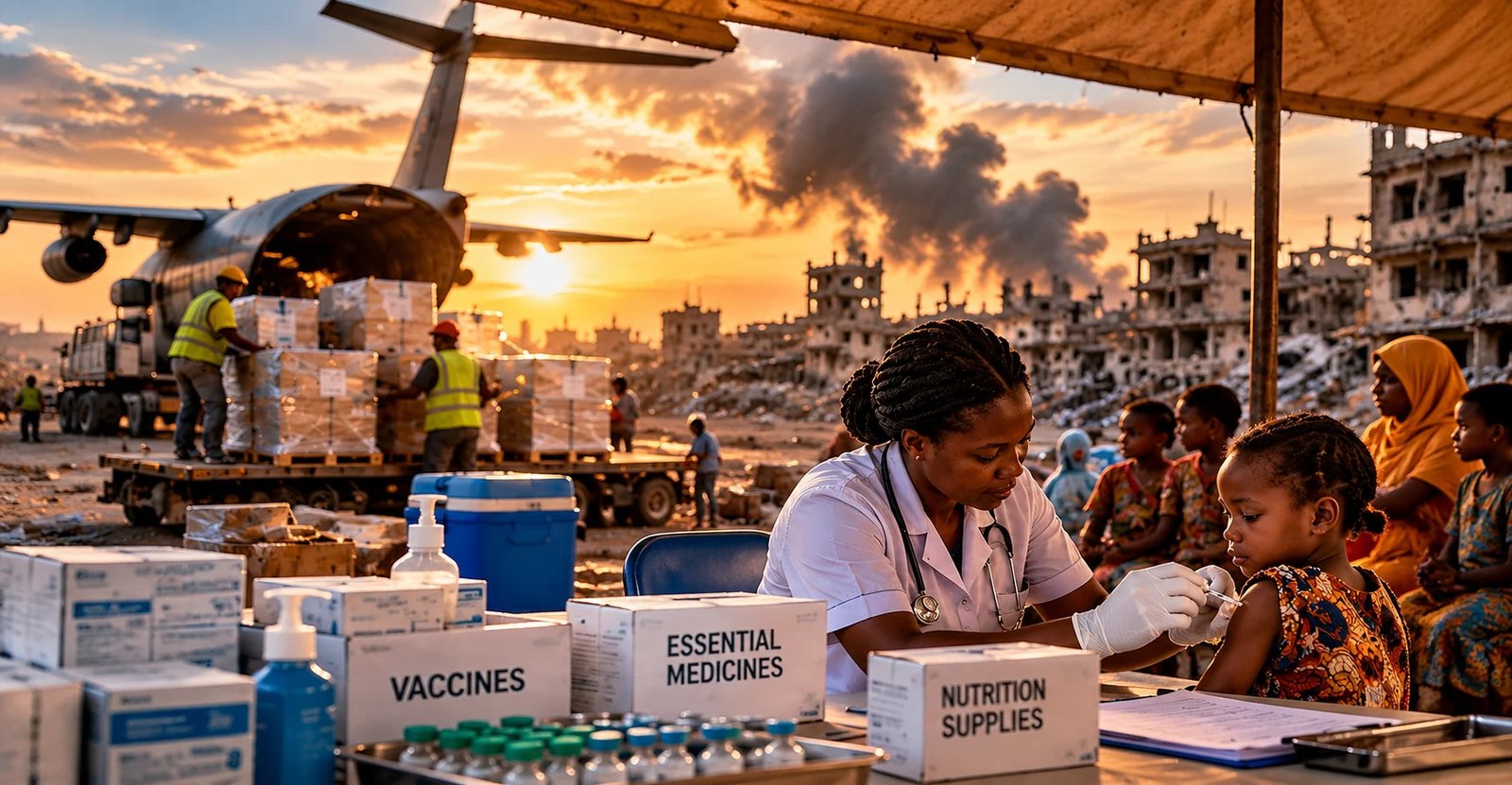
Imagine a rural clinic preparing to vaccinate children. Nurses are ready, families have arrived, and the vaccines are expected. But the backup generator needs fuel, replacement supplies have been delayed, and transport costs are rising. The clinic may be thousands of kilometres from a conflict, yet it is exposed to the conflict’s economic consequences.
This is an illustrative scenario, but the underlying pressures are documented. In June 2026, UNICEF reported that air-freight costs for vaccines from India to Ethiopia, Nigeria and the Democratic Republic of the Congo had risen 50–70%. Trucking costs for ready-to-use therapeutic food from Kenya to Somalia, South Sudan and the DRC had risen around 30%. UNICEF also warned that shipping diversions and congestion were delaying vital deliveries.1
For countries across the Global South, health security cannot be defined by hospitals and medicines alone. It also depends on energy, shipping, water, food, public finance and the ability to keep essential services functioning during international disruption.
Energy security is health security
Electricity powers operating theatres, oxygen concentrators, laboratories, refrigeration, water pumps and emergency communications. Fuel moves ambulances, supplies and health workers. When these inputs become costly or unreliable, the ability to deliver care is weakened.
UN Trade and Development (UNCTAD) examined 75 vulnerable economies in June 2026 and found that 65 were net oil importers. It estimated that a sustained 50% rise in refined oil prices could increase their combined annual net oil import bill by more than US$20 billion, assuming import quantities remained unchanged.2 This is a scenario estimate, not a recorded bill.
Health systems therefore need more than emergency fuel allocations. Distributed solar power, batteries, well-maintained backup systems and energy-efficient cold chains can reduce exposure to fuel disruptions. These investments must include realistic financing for maintenance and replacement—not just installation.
Medicines and vaccines: a fragile chain of access
Pharmaceutical supply chains connect ingredient producers, manufacturers, regulators, ports, freight companies, warehouses and clinics. International specialization can lower costs, but dependence on narrow supply routes creates vulnerabilities when transport is interrupted or prices surge.
Even where vaccines exist, delivery may fail because of financing, refrigeration, transport or staffing constraints. UNICEF’s 2026 freight figures show how logistics shocks can erode the purchasing power of humanitarian budgets.1
The answer is not blanket self-sufficiency. It is smarter diversification: regional pooled procurement, reliable demand for regional manufacturers, strengthened regulatory systems, better stock visibility and carefully targeted emergency reserves. Manufacturing capacity without affordable prices and dependable purchasing arrangements will not by itself secure access.
Food security is also disease prevention
Energy prices affect irrigation, fertilizer production, farming equipment and food transport. Trade interruptions can then compound local droughts, flooding and conflict. Households facing food inflation may reduce the quality of their diets or delay medical care.
Malnutrition weakens resistance to infection, worsens maternal and child health outcomes and makes recovery harder. This is why agricultural resilience, local food systems and nutrition support belong in health-security planning, rather than being treated as separate development concerns.
Governments should assess which essential food and fertilizer imports depend on a handful of corridors, expand regional trade where practical, and protect nutrition programmes when fiscal pressures rise.
Water, sanitation and the hidden cost of disruption
Water services need electricity, pumping equipment, treatment chemicals, maintenance and transport. A disruption in any of these inputs can reduce safe water access and increase exposure to waterborne disease.
WHO and UNICEF reported that in 2024 approximately 2.1 billion people lacked safely managed drinking water and 3.4 billion lacked safely managed sanitation. They also reported that safely managed drinking-water coverage in fragile contexts was 38 percentage points lower than in other countries.3
Reliable water infrastructure is not an optional add-on to public health. It is a frontline defence against diarrhoeal disease and outbreaks, especially in displaced or underserved communities. Solar-powered pumping, local maintenance capacity and transparent water governance can help reduce vulnerability.
Existing diseases do not pause for geopolitics
Outbreaks and chronic illnesses continue even when international attention shifts to conflict. Malaria, tuberculosis, HIV, cholera, maternal complications, diabetes and cancer all require sustained access to treatment, diagnostics and trained personnel.
WHO’s World Malaria Report 2025 estimated 282 million malaria cases and 610,000 malaria deaths worldwide in 2024. Most of the burden remained in the WHO African Region.4
A delayed delivery of tests or treatments can undermine disease control; a fuel shortage can affect outreach and referrals. Preparedness must therefore protect routine services as well as emergency response.
The opportunity: resilience by design
The Global South is not powerless in the face of these shocks. But resilience will require coordination across ministries and borders, with practical priorities:
- Power essential health facilities: invest in reliable electricity, cold-chain systems and maintenance.
- Map critical dependencies: track medicines, vaccines, fuel, food, water-treatment inputs and key transport corridors.
- Diversify procurement: support regional suppliers and pooled purchasing where they improve value and reliability.
- Protect household health: maintain nutrition, water, sanitation and primary-care services during price shocks.
- Finance continuity: create realistic contingency budgets and safeguard routine operating costs.
- Strengthen South–South cooperation: share technology, evidence, procurement arrangements and training across countries.
These actions are not substitutes for diplomacy or humanitarian protection. They are ways to reduce the health damage caused by disruptions that individual countries cannot always prevent.
Conclusion: build resilience before the next shock
When shipping lanes close or energy prices rise, the consequences do not stop at borders. They can appear in the price of a medicine, the reliability of a clinic refrigerator, the cost of a family meal or the safety of a community’s water supply.
The next global health emergency may begin at a port, a fuel terminal or a disrupted trade corridor—not in a hospital. The measure of preparedness will be whether countries can keep essential services working when that happens.
For the Global South, health security must be built into the wider architecture of sustainable development. Resilience is not something to improvise after systems fail; it is something to finance, govern and maintain beforehand.
Sources and further reading
- UNICEF Supply Division, “Increased transport costs mean less money for the life-saving supplies children need,” 2 June 2026
- UNCTAD, “New UNCTAD monitor warns vulnerable economies face the heaviest burden from oil shocks,” 2 June 2026
- WHO/UNICEF, “1 in 4 people globally still lack access to safe drinking water,” 26 August 2025
- WHO, World Malaria Report 2025 — executive summary
Editorial note: This is an opinion article. Policy recommendations are GSI’s analysis; reported statistics are attributed to their original sources. The opening clinic scenario is illustrative, not a documented case. Figures refer to the years and populations specified by each source.